
 MyCLHA
 LPNs
LPNs
Standards of Practice for HCAs on Restricted Activities and Supervision Requirements
What’s in the document?
Regulated health professionals follow common standards for their competence and conduct. In our series, “What’s in the Document?” we will share information on key requirements for Health Care Aides (HCAs) in Alberta as established in documents from the College of LPNs and HCAs of Alberta (CLHA).
What Are the Standards of Practice for HCAs on Restricted Activities and Supervision Requirements?
Standards of practice explain the behaviour that HCAs are expected to meet in their professional practice. Any action that does not follow standards of practice could be considered unprofessional conduct.
The Standards of Practice for HCAs on Restricted Activities and Supervision Requirements outline the expectations every HCA must meet when performing a restricted activity.
What Is a Restricted Activity?
“Restricted activity” is a term used in the Health Professions Act to describe high-risk health services that a regulated professional can only perform if the professional has:
- Authorization, through the Health Professions Restricted Activities Regulation.
- The knowledge, skills, and abilities to do so safely and ethically.
What’s in the Document?
These Standards of Practice describe the restricted activity that HCAs are authorized to perform and the regulatory requirements for performing it.
Which Restricted Activity Can HCAs Perform?
HCAs are authorized:
to insert or remove instruments, devices, fingers, or hands beyond the:
- labia majora, or
- anal verge.
Examples of this restricted activity include fecal evacuation (e.g., suppositories or fleet enemas), management of menstruation, or inserting some vaginal medication.
What Requirements Do HCAs Need to Meet?
When performing restricted activities, HCAs need to make sure that they have the knowledge, training, skills, judgment, and competence required to perform a restricted activity safely.
HCAs must follow relevant legislation, regulations, CLHA regulatory documents, and employer requirements when performing restricted activities.
More information about requirements can be found in the Standards of Practice.
When Is Supervision Required?
Supervision by an authorized professional, such as a nurse, is required when an HCA performs any restricted activity. HCAs may require direct, indirect, or remote supervision to perform a restricted activity depending on their level of experience.
- Direct supervision: a supervising health professional is physically present at the point of care.
- Indirect supervision: a supervising health professional is readily available on-site and can provide assistance when needed.
- Remote supervision: a supervising health professional is available for consultation and guidance through technology (e.g., phone or video conference).
Where Can I Find More Information?
CLHA Documents & Tools
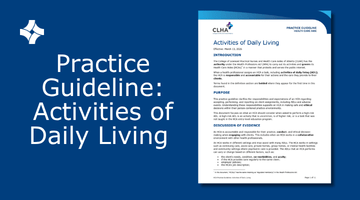
Clarifies HCA responsibilities and expectations related to ADLs.
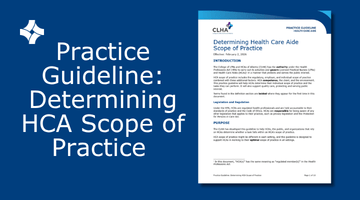
Supports understanding of how to determine HCA scope of practice.
Guides users in making decisions about HCA scope of practice.
Provides HCAs with an understanding of how regulation works and impacts their practice.
How to Use CLHA Documents
When determining practice and conduct requirements, HCAs should refer to legislation, CLHA documents, and employer requirements.
Contact
For support in understanding and applying regulatory requirements, contact the Professional Practice Team.